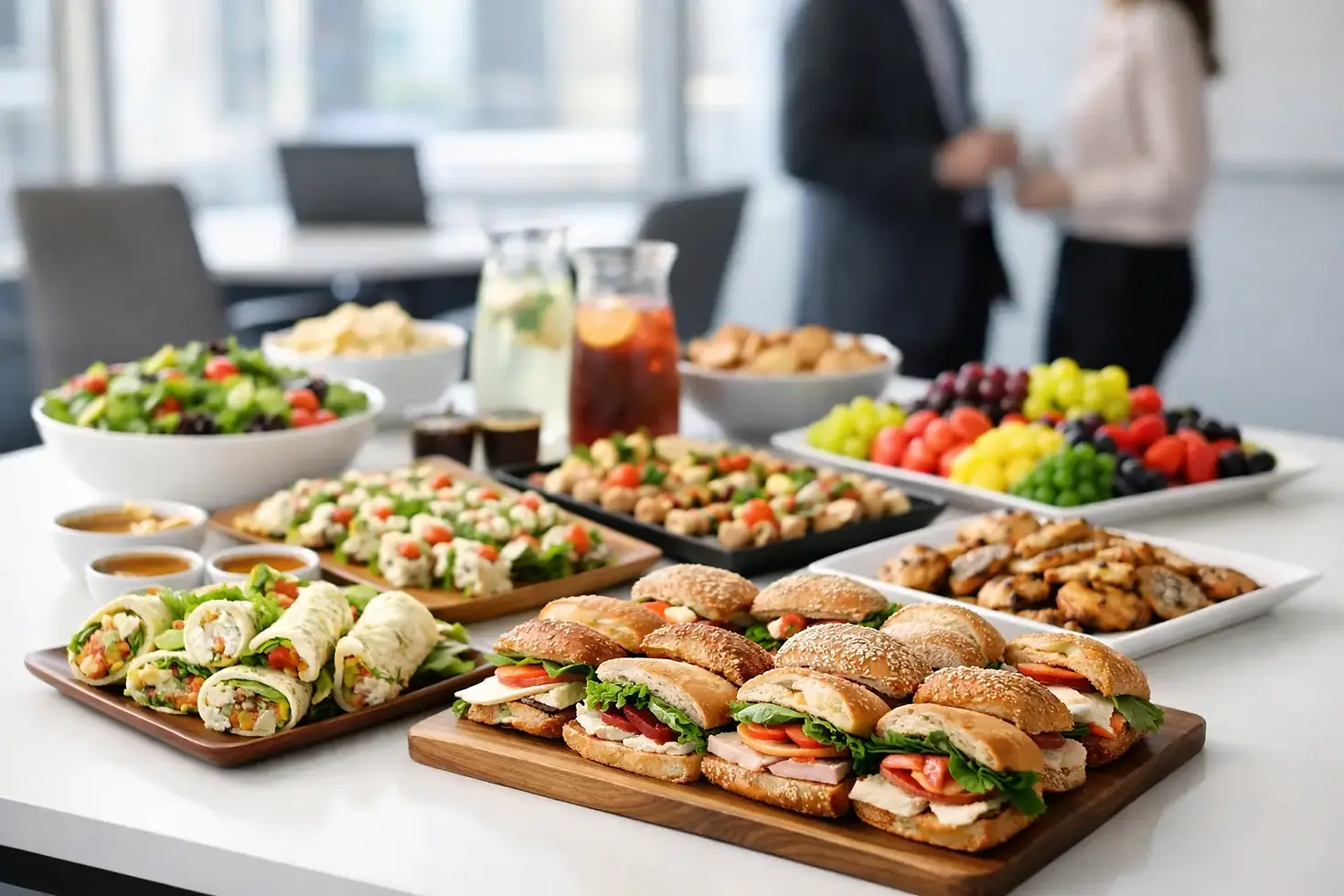
12 Corporate Lunch Catering Examples

If you have ever watched a team meeting lose momentum the minute a sad sandwich tray hits the table, you already know why strong corporate lunch catering examples matter. The right lunch does more than feed a group - it keeps energy up, respects different diets, and makes the company look organized, thoughtful, and easy to work with.
For most offices, the best catering choice is not the fanciest one. It is the one that matches the meeting. A client pitch needs polish. A staff training needs speed and easy serving. A team celebration should feel generous and social. When lunch fits the purpose, people notice.
Corporate lunch catering examples for different office needs
The smartest way to plan office catering is to think in formats, not just dishes. Here are 12 corporate lunch catering examples that work for different team sizes, schedules, and expectations.
1. Individually boxed Mediterranean lunches
Boxed lunches are still one of the easiest choices for trainings, seminars, and compliance-friendly workplaces. They keep distribution simple and cut down on crowding around a buffet. A strong version feels more elevated than the usual deli box, with options like chicken kabob plates, grilled vegetable wraps, hummus, salad, and rice packed in a way that travels well.
This format works especially well when attendees are arriving from different departments or eating on staggered schedules. The trade-off is that boxed meals can feel less social than shared service, so they are best for efficiency-first events.
2. Build-your-own wrap and pita bar
A wrap or pita station gives people flexibility without turning lunch into a long production. Guests can choose proteins like chicken, beef, falafel, or grilled vegetables, then add toppings such as cucumbers, tomatoes, onions, feta, and sauces.
This option is a strong fit for creative teams, casual office gatherings, and mixed dietary groups. It feels interactive, but not messy if the setup is organized well. If timing is tight, pre-built wraps may move faster than full customization.
3. Persian kabob platters for executive meetings
Some meetings need a little more presence. Kabob platters with saffron rice, grilled vegetables, salad, and fresh bread give lunch a more premium feel without crossing into stuffy territory. They look impressive on a conference table and offer recognizable, crowd-pleasing flavors.
This is one of the best corporate lunch catering examples for leadership meetings, board lunches, and client-facing presentations. The only thing to consider is portion planning. Shared platters can be generous, but under-ordering is noticed immediately.
4. Mezze spreads for collaborative teams
A mezze-style lunch creates a naturally social setup. Hummus, baba ghanoush, stuffed grape leaves, labneh, olives, fresh herbs, pita, and small bites encourage people to share and graze while they talk.
This works well for brainstorms, agency meetings, and team-building lunches where conversation matters. The energy is more relaxed and communal. It may not be ideal for highly formal meetings or situations where guests need a full plated meal to feel satisfied, so adding one or two protein options usually helps.
5. Healthy protein bowls for productivity-focused offices
When teams want lunch that feels lighter, protein bowls are a smart move. Think grilled chicken or salmon over rice or greens with chopped vegetables, herbs, and a bright sauce. These meals feel current, clean, and practical for afternoon productivity.
Bowls also make dietary customization easier. You can offer vegetarian, high-protein, low-carb, and gluten-conscious options without making the menu feel fragmented. For wellness-minded workplaces, this format often lands better than heavier comfort food.
6. Buffet-style lunch for larger staff meetings
Buffets remain a go-to for all-hands meetings, employee appreciation lunches, and office milestones. They scale well, create variety, and usually offer better value per person than individually packaged meals. A Mediterranean buffet with kabobs, rice, salad, roasted vegetables, dips, and bread gives guests a complete meal with broad appeal.
The key is flow. A buffet can feel generous or chaotic depending on setup, serving utensils, and spacing. For larger groups, experienced catering support matters as much as the food itself.
7. Vegetarian-forward catering that still feels substantial
One common mistake in office catering is treating vegetarian meals like an afterthought. A better approach is to build a menu where vegetable-based dishes are strong enough that anyone would choose them. Falafel platters, grilled vegetable skewers, lentil rice, fattoush, roasted cauliflower, and rich dips all bring flavor and variety.
This is especially useful for diverse offices where eating preferences vary widely. It keeps the lunch inclusive without making anyone feel like they received the backup meal.
8. Client lunch with polished family-style service
For relationship-driven meetings, family-style service can strike the right balance between professional and welcoming. Shared plates of premium appetizers, grilled meats, rice dishes, and salads create a more memorable table than disposable trays lined up against a wall.
This style works when you want guests to slow down and actually connect. It does require more space and a more intentional setup, so it is better for conference rooms with a proper table or off-site lunches than packed office break rooms.
9. Quick-service lunches for training days
Training lunches have one main job: keep people fed without throwing the schedule off. That usually means fast-serving meals with minimal mess. Rice plates, wraps, and pre-portioned salads tend to perform well because they are easy to distribute and eat during short breaks.
This is where practicality should win over novelty. If a menu needs too much assembly or creates long lines, people come back late and the session loses rhythm.
10. Celebration lunches with a little more flair
Not every office lunch is strictly functional. Promotions, birthdays, quarterly wins, and holiday gatherings call for food that feels festive. This is where you can lean into color, variety, and presentation with grilled skewers, saffron rice, vibrant salads, hot appetizers, and desserts that make the table look like an occasion.
A lively menu changes the mood of the room. It tells people this is not just another Tuesday lunch meeting. For brands that care about culture, that detail matters.
11. Mixed-menu catering for diverse teams
Large offices rarely agree on one thing, and lunch is no exception. One of the most practical corporate lunch catering examples is a mixed menu with a few clear lanes: grilled proteins, vegetarian items, salads, rice or wraps, and shareable dips or sides. This lets everyone build a meal that works for them without turning the order into a maze.
The benefit is flexibility. The challenge is balance. Too many choices can overcomplicate ordering, so the best mixed menus stay curated rather than endless.
12. Off-site lunch catering with restaurant-quality feel
Sometimes the lunch is part of a bigger experience - a team retreat, a client event, or a hosted gathering outside the office. In those cases, catering should feel closer to hospitality than bulk food delivery. Presentation, timing, temperature, and service all matter more.
This is where a full-service restaurant partner can stand out. A brand like Divan Grill & Lounge brings bold Persian and Mediterranean flavors that feel distinct from standard office catering, which can make the event more memorable without becoming overly formal.
How to choose between corporate lunch catering examples
The best option depends on three things: the purpose of the event, the makeup of the group, and how the lunch needs to be served. If the meeting is formal and client-facing, presentation carries more weight. If it is an internal training, speed and simplicity usually matter more. If the team is mixed in age, role, and food preference, menu variety becomes essential.
Budget matters too, but not always in the obvious way. A cheaper lunch that arrives late, runs short, or leaves half the room unimpressed can cost more in reputation than a slightly stronger order would have. Good catering supports the meeting. Bad catering becomes the meeting.
It also helps to think through logistics before picking a menu. Ask whether guests will be seated or standing, whether utensils are needed, how much table space is available, and whether the group has time to serve themselves. These small details shape which format will actually work.
What makes corporate lunch catering feel worth it
People remember flavor, but they also remember whether lunch felt easy. Orders feel worth it when the food arrives fresh, portions are right, dietary needs are respected, and the setup matches the tone of the event. A strong caterer understands that office lunches are not only about feeding people. They are about helping the organizer look prepared.
That is why the best menus usually blend comfort and polish. Familiar enough that everyone is happy to eat it, but distinctive enough that it does not feel generic. Persian and Mediterranean catering does this especially well because it offers grilled proteins, fresh herbs, vibrant sides, vegetarian depth, and shareable plates that naturally fit group dining.
If you are choosing lunch for a team, start with the experience you want people to have. Once that is clear, the menu gets a lot easier. Great office catering should make the day run smoother, the room feel more welcoming, and the host look like they thought of everything.


Comments