How to Order Persian Kabobs Like a Pro
- MICHAEL AFSHAR
- Apr 25
- 6 min read

The first time you read a Persian menu, it can feel like everyone else already knows the code. Koobideh, barg, soltani, chenjeh - the names sound familiar once you have ordered a few times, but if you are new, it helps to know what actually lands on the table. If you are wondering how to order Persian kabobs without guessing, the good news is simple: once you know the cut, the seasoning style, and how hungry your group is, ordering gets easy fast.
Persian kabobs are built around balance. You are not just picking meat. You are choosing the texture, the smoke level from the grill, the richness, and what goes best with saffron rice, grilled tomato, fresh herbs, or a shared spread of appetizers. That is what makes them such a strong choice for a casual dinner, a date night, or a lively group meal.
How to order Persian kabobs without overthinking it
Start with one question: do you want ground meat, tender filet-style meat, or something with a little more bite? That one decision narrows the menu right away.
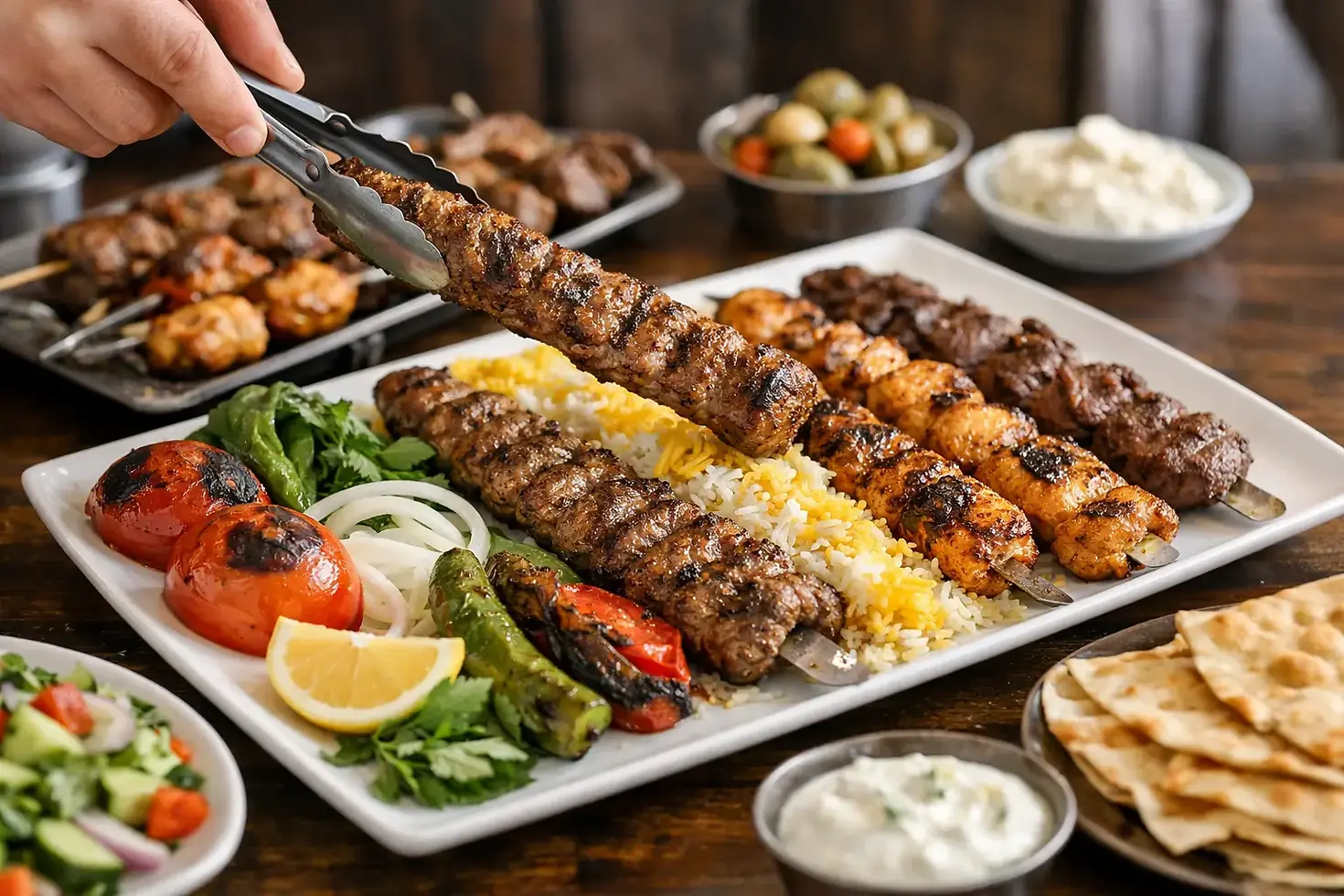
If you want something classic, juicy, and easy to love, koobideh is usually the move. It is made from seasoned ground meat, often beef or a beef and lamb mix, pressed onto skewers and grilled over open flame. The texture is soft, rich, and smoky, and it works for almost anyone trying Persian food for the first time.
If you want a more refined, tender cut, look at barg. Barg is typically thin-cut filet mignon or beef tenderloin, marinated and grilled. It is cleaner in texture than koobideh and feels a little more elevated, especially if you want a kabob that is less heavily seasoned and more about the quality of the meat.
If you prefer cubes of meat with a heartier chew, chenjeh is a strong pick. It is usually chunks of marinated beef, grilled until charred outside and tender inside. This is a better order for someone who likes steakhouse-style bites rather than the softer texture of ground kabob.
Then there is chicken. Joojeh kabob is one of the most popular items on any Persian menu for good reason. It is marinated chicken, often with saffron and citrus, and grilled until golden. If you want something lighter but still full of flavor, this is one of the safest and most satisfying options.
Know the kabobs before you order
A lot of confidence comes from recognizing the main players on the menu. Once you know a few names, the menu stops feeling unfamiliar.
Koobideh
This is the everyday favorite for many guests. It is juicy, savory, and usually served in two long skewers. If you want a dependable first order, koobideh is hard to miss with.
Barg
Barg is tender and elegant. It is the choice for diners who want filet-style beef with less fat and a softer bite. If you are deciding between koobideh and barg, think comfort versus finesse.
Chenjeh
This is for people who want grilled beef cubes with a stronger grilled edge. It tends to feel a little more substantial and meat-forward than barg.
Joojeh
Joojeh kabob is chicken, often saffron-marinated, and it is one of the best choices for guests who want a lighter plate or are not in the mood for red meat.
Soltani and combo plates
If you see soltani, that usually means a combination plate, often one skewer of barg and one skewer of koobideh. Combo plates are ideal when you do not want to choose just one style. They are also great if you are trying Persian kabobs for the first time and want a broader experience in one order.
What to ask yourself before ordering
The best order depends on your appetite, your mood, and whether you are sharing.
If you are dining solo and want something straightforward, one kabob plate with rice is usually enough. If you are very hungry, or if you skipped lunch and showed up ready for a full dinner, a combo plate makes more sense.
If you are out with friends or family, Persian food shines when you order for the table. Instead of everyone getting the same thing, mix it up. One koobideh, one joojeh, one barg or chenjeh, plus appetizers, gives the table contrast. That way you get the full spread of flavors and textures rather than four versions of the same plate.
This is especially true in a social setting. At a lively dinner spot where the night is built around great food, music, and conversation, a table with variety just feels better. You get more to pass around, more to talk about, and a better sense of what you will want next time.
Rice, bread, and sides matter more than people think
A lot of first-time diners focus only on the kabob and overlook what comes with it. That is a mistake, because the supporting pieces are part of the full experience.
Most Persian kabob plates come with rice, and that is usually the right call. Persian rice is not filler. It is part of the flavor profile, especially when it is finished with saffron. The kabob brings smoke and richness, while the rice adds aroma and balance.
Grilled tomato is another staple that deserves attention. It is not there just for color. That soft, lightly charred tomato cuts through the richness of the meat and brings a gentle sweetness to the plate.
If the menu offers fresh herbs, onions, yogurt-based sides, or mast-o-khiar, they can round out the meal nicely. A creamy, cool side works particularly well with koobideh or chenjeh. If you are ordering for a group, appetizers and mezze make the whole table feel more complete.
Bread can be a great add-on, especially if you like building bites with meat, herbs, onion, and yogurt. But if you are already getting rice, you may not need both unless you are sharing or ordering big.
The most common ordering mistakes
One mistake is assuming all Persian kabobs are heavily spiced. They are not. Persian grilling is often more about marinades, smoke, saffron, onion, salt, and the quality of the meat than aggressive heat. If you are expecting something intensely spicy, adjust that expectation.
Another mistake is ordering too narrowly. If you are with other people, do not treat it like a one-plate-only meal. Persian dining is naturally communal. The best table usually has a few kabob styles, a couple of starters, and enough variety to keep things interesting.
The third mistake is not asking about portion size. Some plates are generous, especially combo platters. If you are deciding between separate entrees and sharing, it helps to ask what makes the most sense for your group.
Best first orders for different diners
If you want the safest first experience, order koobideh with saffron rice. It is classic, satisfying, and easy to understand from the first bite.
If you want something a little lighter, go with joojeh. It still gives you the signature Persian flavor profile, but the chicken keeps the plate feeling less heavy.
If you are a steak person, choose barg or chenjeh. Barg is more tender and polished. Chenjeh has a stronger grilled personality.
If you are indecisive, order a combo. That is often the smartest answer for how to order Persian kabobs when you are new, because it lets you compare styles without committing to just one.
If you are ordering for a group, build around contrast. Start with one ground kabob, one chicken, and one beef filet or beef cube option. Add rice, shared appetizers, and a few sides that cool and brighten the table.
How to order Persian kabobs for a better night out
Your order should match the occasion. A quick dinner might call for one reliable favorite. A weekend night out is different. That is when bigger combination platters, shared appetizers, and a more social pace make the meal feel complete.
For date night, many people like the balance of one chicken and one beef option to share. For a group dinner, ordering family-style creates a better energy than everyone staying in their own lane. For celebrations or larger gatherings, catering-style kabob selections can make things easier because Persian food holds up beautifully in a shared format.
That is part of why places like Divan Grill & Lounge stand out - the food already works for both dinner and a full night of conversation, entertainment, and lounge atmosphere. Persian kabobs are not just a menu item. They are a social meal.
Once you know what each kabob offers, ordering stops being a guessing game and starts feeling fun. Pick the texture you want, match it with the right sides, and if you are with a group, order with variety in mind. The best Persian kabob order is not the fanciest one. It is the one that fits your appetite, your table, and the kind of night you came out to have.


Comments