
Persian Family Style Dinner Guide
- MICHAEL AFSHAR
- Jul 6
- 6 min read

The best Persian meals are not built around everyone ordering in isolation. They land on the table in waves - saffron rice glowing gold, grilled kabobs still smoking, herb-packed stews, yogurt dips, warm bread, and plates that keep moving from hand to hand. That is the heart of a Persian family style dinner guide: less focus on individual entrees, more focus on the shared experience.
If you are planning dinner for a group, family style works especially well because Persian cuisine was made for it. The flavors are bold but balanced, the portions are naturally shareable, and the table feels generous without being stiff or overplanned. Whether you are organizing a birthday dinner, a weekend get-together, or a night out that turns into music, tea, and conversation, the right mix makes all the difference.
What makes a Persian family style dinner work
A strong family style table has contrast. You want smoky grilled meats against fresh herbs, rich stews against bright yogurt, and fluffy rice beside crisp tahdig if it is available. The goal is not to order one of everything. It is to build a table that feels complete.
That usually means thinking in layers. Start with a few mezze-style dishes that wake up the appetite. Add one or two signature proteins, bring in rice and bread as the foundation, then round everything out with vegetables or a stew. If you skip those layers, the meal can feel either too heavy or too narrow.
Portion planning matters too. Persian food is filling, especially once rice, bread, and appetizers start circulating. Groups often over-order on mains and under-order on variety. A better move is to create a wide spread with enough centerpiece dishes to satisfy everyone without stacking the table with redundant plates.
Your Persian family style dinner guide for building the table
For most groups, the sweet spot is to mix familiar favorites with one or two traditional dishes that give the meal more character. That way, guests who already love Persian food get the experience they came for, while first-timers still feel comfortable jumping in.
Start with shareable appetizers
Begin with dishes that invite everyone to taste right away. Hummus, mast o khiar, babaganoush, and other mezze-style plates do that job well. They keep the table active while the larger dishes arrive, and they add freshness before the richer grilled items hit.
If your group likes variety, this is where Persian and Mediterranean menus work beautifully together. A few cold dips, warm bread, and maybe a salad give the dinner momentum from the first few minutes. For a casual social night, appetizers also buy time while everyone settles in, orders drinks, and starts catching up.
Make kabobs the anchor
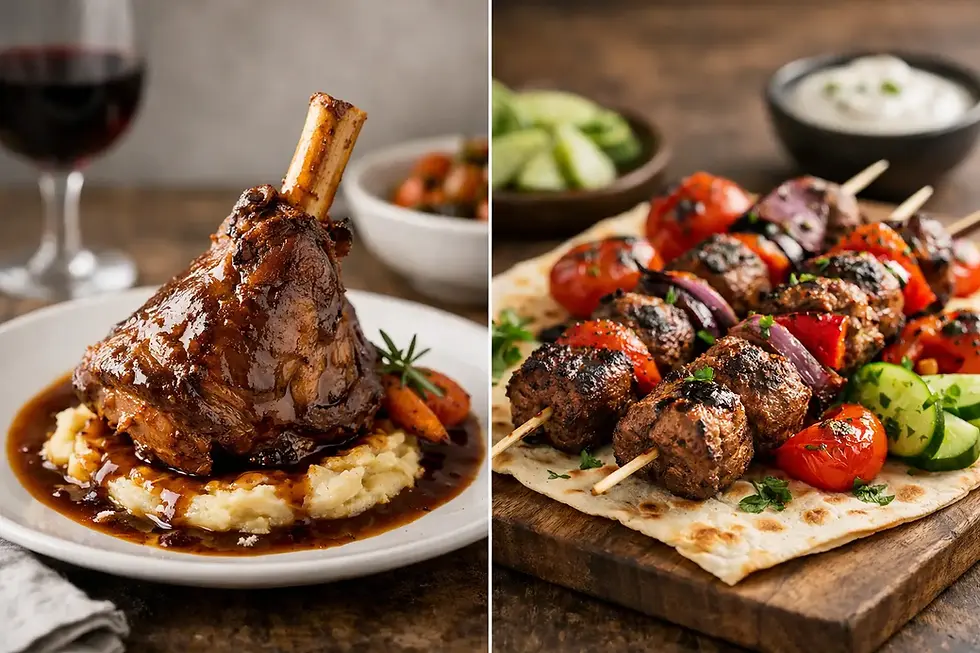
Kabobs are usually the centerpiece of a family style Persian meal because they are easy to share and instantly recognizable. Chicken kabob, koobideh, barg, and combinations of grilled meats give the table range without making things complicated.
For groups with mixed tastes, combination platters are often the smartest choice. You get different cuts, textures, and seasoning profiles in one order. Chicken keeps things lighter, koobideh brings that juicy, savory comfort people expect, and steak kabobs add a more premium feel for celebrations or date-night groups.
The trade-off is that an all-kabob dinner can feel one-note if you do not balance it. That is why rice, grilled vegetables, and one stew or seafood dish can make the table feel more complete.
Do not treat rice like a side detail
Persian rice is part of the experience, not background filler. Saffron rice brings aroma, color, and richness that ties the whole meal together. If tahdig is available, it often becomes the first thing everyone reaches for.
For family style dining, rice is what stretches the meal in a good way. It lets guests build each bite differently - a little kabob, some grilled tomato, a spoonful of yogurt, then rice to pull it all together. That flexibility is one reason Persian dinners work so well for mixed groups and long, relaxed evenings.
Add one stew or specialty dish
If the table only has grilled items, it can still be great, but it will not show the full depth of Persian cuisine. Adding one stew creates more contrast and gives guests a taste of the slow-cooked side of the menu.
Depending on the restaurant, that could mean ghormeh sabzi, fesenjan, or another traditional dish with deeper, more layered flavor. This is especially helpful when you are hosting guests who want an authentic dinner, not just a grilled platter. A stew also works well in cooler weather or for family gatherings where people want something comforting and familiar.
How to order for different group types
Not every group approaches dinner the same way. A double date usually wants a polished spread that feels abundant without becoming excessive. A birthday group may want a bigger mix, more appetizers, and dishes that keep everyone engaged at the table. Families with kids may lean toward kabobs, rice, wraps, and simpler shareables.
For a group of four to six, it usually makes sense to order several appetizers, two to three main proteins, rice, and one extra dish for variety. For larger groups, platters become more practical because they keep service smooth and make sharing easier.
If your dinner is part of a bigger night out, pacing matters. You may not want the heaviest possible meal if the plan includes cocktails, hookah, music, or staying late. In that case, lean into grilled meats, cold appetizers, salads, and lighter sides. If the dinner itself is the main event, add the stew, extra rice, and dessert or tea at the end.
What to consider if your group has mixed preferences
One of the strengths of Persian and Mediterranean dining is range. It is easy to build a table that includes grilled meats, seafood, vegetarian dishes, and lighter mezze without making anyone feel like an afterthought.
If your group includes vegetarians, make sure they have more than one fallback option. Dips and salad alone are not enough for a full dinner. Look for eggplant dishes, falafel, rice-based plates, or other substantial vegetarian choices so the table feels designed for everyone.
For guests new to Persian cuisine, keep a mix of approachable and traditional. Chicken kabob and koobideh are easy entry points. From there, a saffron rice dish or classic stew gives the meal more personality. That balance keeps the dinner exciting without making it feel unfamiliar.
Family style dining is also about atmosphere
A good Persian dinner is not just about what arrives on the plate. It is about how long people stay at the table, how easily the meal turns social, and whether the setting matches the energy of the group. Some nights call for a quiet dinner. Others call for a place where dinner naturally rolls into music, tea, cocktails, or a lounge vibe.
That is where the restaurant matters as much as the menu. If you are planning a group night, date night, or celebration, you want a place that can handle both the meal and the mood. In Orange County, that is part of why diners look for venues that combine authentic Persian cuisine with a more vibrant social atmosphere, rather than treating dinner as a quick stop before the real night begins.
At a place like Divan Grill & Lounge, family style dining fits the experience naturally. Guests can build a table around kabobs, saffron rice, mezze, seafood, or vegetarian plates, then stay for the music, hookah, and late-night energy that turns dinner into something more memorable.
A few easy mistakes to avoid
The biggest mistake is ordering too many similar mains. Three versions of grilled meat may sound generous, but the table can end up feeling repetitive. The better strategy is variety across textures and temperatures.
Another common miss is underestimating how filling the meal becomes once bread, rice, and appetizers are involved. Family style should feel abundant, not wasteful. If you are unsure, build a balanced spread first and add more only if your group truly needs it.
Finally, do not rush the meal. Persian dining shines when people share, pause, sample, and go back for another bite. It rewards conversation and a little extra time.
The right family style dinner does more than feed a table. It creates movement, energy, and that rare feeling that nobody wants to leave just yet.


Comments