
Persian Kebab vs Shawarma - Which Is Right for You?
- MICHAEL AFSHAR
- Jul 10
- 5 min read

The choice can change the whole night: a sizzling skewer served over saffron rice invites a long, sit-down dinner, while a warm wrap packed with shaved meat, pickles, and sauce is made for a satisfying handheld bite. When it comes to Persian kebab vs shawarma, both bring serious flavor, but they come from different culinary traditions and deliver very different dining experiences.
Neither is the automatic winner. The better choice depends on what you are craving, how hungry you are, and whether your table is settling in for a full meal or grabbing something bold and quick before the evening begins.
Persian Kebab vs Shawarma: The Core Difference
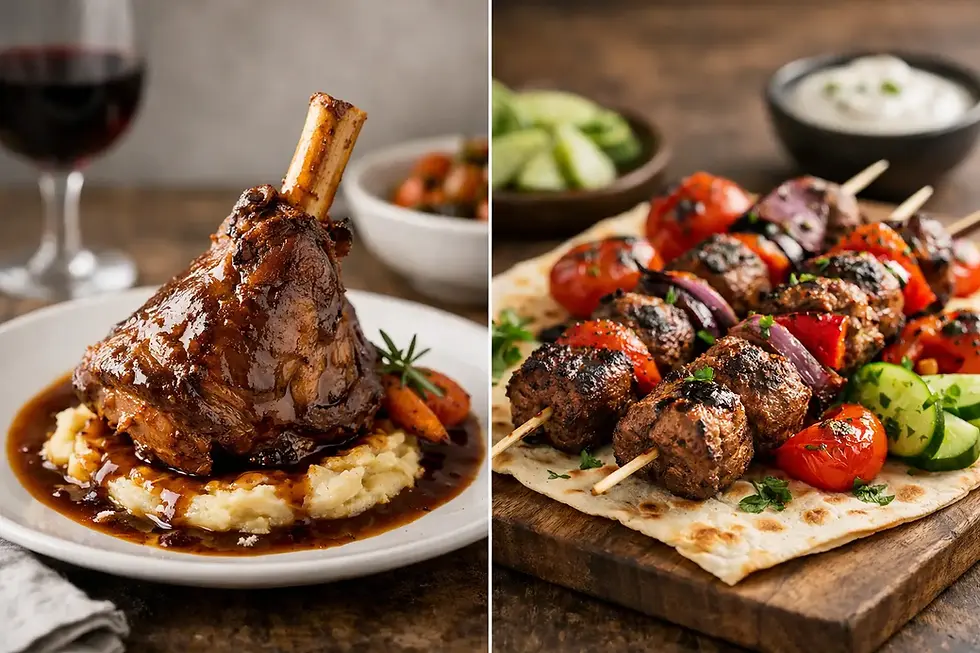
Persian kebab is centered on open-flame grilling. Meat is typically shaped onto long metal skewers or cut into pieces, then grilled until smoky, tender, and lightly charred at the edges. It is commonly served as a plated meal with basmati rice, grilled tomatoes, fresh herbs, onions, and sides that make every bite feel complete.
Shawarma is prepared differently. Seasoned meat is stacked on a vertical rotating spit, slowly roasting as the outside caramelizes. The cook shaves thin pieces from the exterior as they are ready, often serving the meat in pita or flatbread with toppings such as garlic sauce, tahini, pickled vegetables, lettuce, tomatoes, or fries.
That contrast in technique matters. Kebab gets its character from direct heat, clean seasoning, and the juicy texture of meat cooked to order on a skewer. Shawarma develops layers of flavor over time as the rotating stack bastes in its own juices and spices. One is a proud centerpiece on the plate; the other is a deliciously messy, flavor-packed wrap.
What Makes Persian Kebab Special?
Persian cuisine has a deep grilling tradition, and kebab is one of its most celebrated expressions. The focus is often on quality meat, balanced seasoning, and careful cooking rather than a heavy coating of spice. Aromatics such as onion, saffron, turmeric, black pepper, and lemon may play a role, but the goal is to let the grilled meat shine.
Koobideh is among the best-known Persian kebabs. It is made with seasoned ground beef, lamb, or a blend, pressed onto a skewer and grilled until tender with a smoky exterior. The texture is soft and juicy, especially when paired with buttery saffron rice and a roasted tomato.
Other favorites offer a different experience. Joojeh kebab features marinated chicken, often brightened with lemon and saffron. Barg is traditionally made with thin, tender cuts of beef filet. For diners who want variety, a combination plate can bring multiple kebabs to one table alongside rice, salads, and mezze.
The portions also tell part of the story. Persian kebab is usually designed to be enjoyed slowly, with shared starters, tea, conversation, and enough room at the table for everyone to sample a little of everything. It fits a family dinner, date night, business gathering, or a celebration where the food needs to feel generous.
What Gives Shawarma Its Signature Flavor?
Shawarma is all about thin slices, savory seasoning, and contrast. As the meat rotates, its outer layer becomes browned and crisp in places while the interior stays tender. Every shaved portion can include both textures, which is part of why shawarma feels so satisfying in a sandwich or wrap.
Chicken shawarma is often seasoned with warm spices, garlic, citrus, and oil, while beef or lamb versions may lean deeper and richer. Recipes vary widely by region and restaurant, so shawarma can taste bright and tangy in one place and darkly spiced in another.
The toppings are not an afterthought. Creamy garlic sauce can soften the spice, tahini adds nuttiness, and pickled turnips or cucumbers bring sharp acidity. Add warm bread and crisp vegetables, and the result is a meal built around layers of texture rather than a single grilled centerpiece.
Shawarma is a strong choice when you want a casual, portable meal. It works for lunch, a quick dinner, or a late-night bite when the group wants something fast, filling, and full of flavor. It can also be plated, but its wrap format remains a major part of its appeal.
Flavor, Texture, and Sides Compared
If you prefer distinct grilled flavor and tender, substantial bites of meat, Persian kebab will likely be your move. The seasonings tend to feel more focused, and the rice-based plate creates a comforting, balanced meal. A spoonful of saffron rice with koobideh, grilled tomato, and sumac is simple, bold, and hard to beat.
If you love spice-forward meat with creamy sauce, tangy pickles, and warm bread in the same bite, shawarma may win you over. It is often more layered and more sauce-driven than kebab. The texture changes constantly too: juicy meat, toasted bread, crunchy vegetables, and bright pickles all compete for attention.
Sides reveal another difference. Persian kebab naturally pairs with saffron basmati rice, shirazi-style salads, mast-o-khiar yogurt dip, grilled vegetables, herbs, and lavash. Shawarma often comes with fries, hummus, garlic sauce, tahini, fattoush, or extra pita. Both can be part of a generous Mediterranean spread, but their ideal accompaniments reflect their individual traditions.
Which One Should You Order?
Order Persian kebab when the occasion calls for a full, unhurried dinner. It is especially right when you want to share appetizers, enjoy a beautifully arranged plate, or introduce someone to the depth of Persian cooking. It is also a great option for groups because different proteins and sides can be mixed across the table.
Choose shawarma when convenience and big, immediate flavor are the priority. A wrap is easy to enjoy during a busy lunch, after work, or on the way to a night out. It can feel lighter or heavier depending on the meat, sauce, and toppings, so it is worth asking how the restaurant builds its version.
There is a practical trade-off as well. A shawarma wrap is often easier to eat on the go, while Persian kebab is better when you have time to sit down and enjoy the full presentation. If you are feeding a crowd, kebab platters and rice dishes tend to create a more communal table. If everyone has different schedules and wants a quick individual order, shawarma is hard to top.
Make It a Bigger Table Experience
The real fun starts when you stop treating this as an either-or decision. A table can begin with hummus, babaganoush, and fresh bread, move into Persian kebab plates, and still make room for a shawarma wrap to share. The flavors complement each other without being identical.
For Orange County diners planning a social night, that flexibility matters. At Divan Grill & Lounge, authentic Persian cuisine can be part of a bigger evening with great food, music, premium hookah, and lounge energy. A kebab dinner has the substance to anchor the table before the night picks up.
For catered gatherings, Persian kebab often delivers the stronger visual and family-style impact, especially alongside saffron rice and a colorful spread of sides. Shawarma can be equally useful for casual office lunches or relaxed events where handheld options make serving easy. The right format comes down to the mood you want guests to remember.
The next time the menu puts Persian kebab and shawarma side by side, follow the occasion as much as the craving. Pick kebab for smoky skewers, saffron rice, and a dinner worth lingering over. Pick shawarma for shaved, seasoned meat and a wrap that brings heat, tang, and comfort in every bite.


Comments