
Family Style Mediterranean Dinner Done Right
- MICHAEL AFSHAR
- Jun 16
- 6 min read

Some dinners are over as soon as the plates hit the table. A family style mediterranean dinner does the opposite. It slows people down, gets everyone reaching across the table, and turns the meal into the event itself.
That is the real appeal. You are not ordering one entrée, eating quietly, and heading out. You are building a table full of mezze, grilled meats, saffron rice, fresh herbs, warm bread, dips, and sides that invite conversation. It feels generous, social, and effortless when it is done well.
For groups, celebrations, and nights when you want more energy than a standard sit-down meal, this format just works. It gives everyone variety, keeps the table active, and creates the kind of atmosphere people actually remember the next day.
Why a family style mediterranean dinner works so well
Mediterranean and Persian-inspired dining were made for sharing. The food naturally arrives in a way that supports the table instead of one person at a time. Hummus, baba ghanoush, mast o khiar, salads, kabobs, grilled vegetables, rice, and wraps all fit easily into a shared spread.
There is also a practical side to it. Group dinners can get awkward when everyone orders separately and half the table wants to trade bites. Family style solves that right away. Guests can sample more, picky eaters usually find something they like, and the host does not need to over-manage every choice.
The trade-off is that family style is best when the table is open to sharing. If your group has strict dietary boundaries or several guests who strongly prefer individual plates, a mixed approach may be better. A few shared starters with individual mains can still capture the same social energy.
What should be on the table
A strong family style mediterranean dinner is about balance. You want cool and warm dishes, grilled and fresh textures, lighter bites and more filling centerpieces. If everything is heavy, the meal drags. If everything is snack-sized, people leave wanting more.
Start with mezze
Shared appetizers set the pace. This is where the table starts to feel full and welcoming fast. Hummus is a given for many groups, but it should not be the only dip on the table. Add a smoky eggplant spread, yogurt-based dips, olives, pickled vegetables, and a chopped salad with brightness and crunch.
Warm pita or fresh bread matters more than people think. It is the connector between dishes and often the first thing everyone reaches for. If the bread is fresh and the mezze has variety, the table already feels like a win before the mains arrive.
Bring in grilled proteins
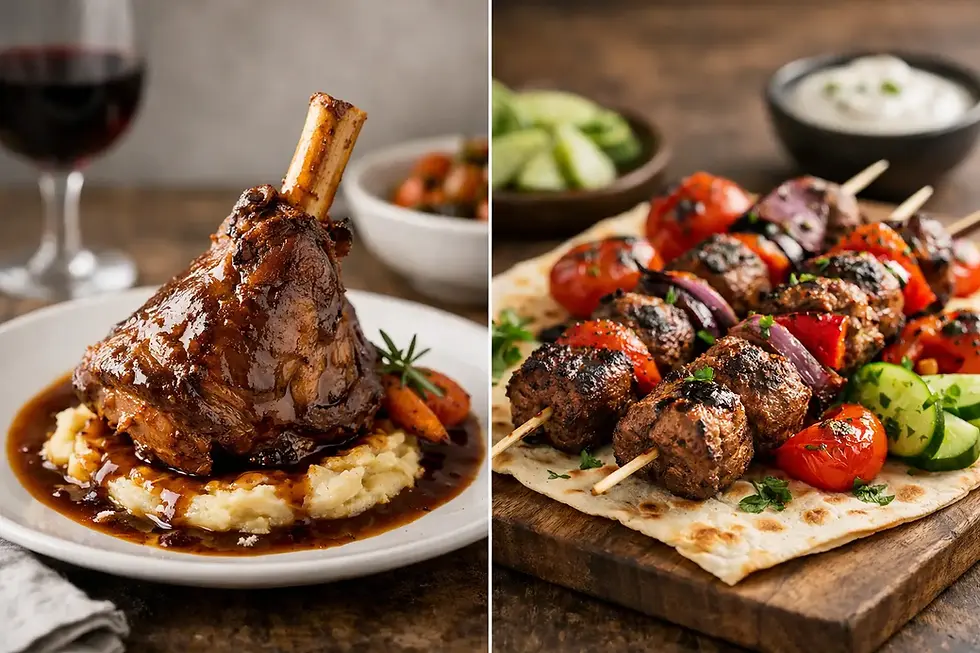
This is where the dinner gets its centerpiece energy. Chicken kabobs, beef koobideh, filet mignon, lamb, grilled shrimp, or salmon all work beautifully in a shared setting. The key is variety. One protein can work for a smaller group, but two or three create a more complete spread and help accommodate different tastes.
If your group includes both adventurous eaters and people who like to keep it simple, go with a mix. Something classic and familiar, like chicken or beef kabobs, alongside a bolder option, gives the table range without making ordering complicated.
Do not overlook the rice and sides
Rice is not just a filler in this style of meal. A well-made saffron rice dish gives the table structure and comfort, especially next to grilled meats and roasted vegetables. It rounds out the sharper, brighter flavors from the dips and salads.
Grilled vegetables, shirazi salad, seasoned potatoes, and herb plates also keep the meal from becoming one-note. The best shared dinners have contrast. Creamy dips, char from the grill, crisp vegetables, fresh herbs, and fragrant rice all play different roles.
How to build a spread that feels generous, not chaotic
The biggest mistake with group dining is ordering randomly. A better approach is to think in layers. Start with two to four mezze for the table, then choose your main shared proteins, then round things out with rice, salad, and one or two vegetable-based sides.
For a casual dinner with friends, you can lean more heavily on starters and grilled platters. For a family celebration, people usually expect more structure, so rice dishes and fuller protein selections make more sense. If it is a later-night gathering, a slightly lighter spread with mezze, wraps, kabobs, and cocktails may fit the mood better than a heavy feast.
Portion style also depends on the group. A table of four can share comfortably with a focused order. A table of eight or more needs a little more intentional variety so the meal feels abundant instead of picked over. Family style should look inviting from the moment it lands.
The atmosphere matters as much as the food
This is where many restaurants miss the mark. Great shared food in a flat room still feels like a basic dinner. The best family-style experience has movement, music, hospitality, and enough energy to keep the night going.
That is why this kind of meal fits so naturally in a lounge-style setting. People are not in a rush. They settle in, pass plates, order another round, and let the night build. For couples meeting friends, families celebrating, or groups that want dinner to become the evening’s main event, the ambiance is not extra. It is part of the value.
At a place like Divan Grill & Lounge, that combination is what makes group dining stand out. Authentic Persian and Mediterranean flavors, a social atmosphere, live entertainment, and lounge energy all support the same idea - dinner should feel like an experience, not a checkpoint.
Family style for celebrations and hosted events
A family style mediterranean dinner is especially strong for birthdays, engagement parties, corporate gatherings, and larger family nights because it feels naturally festive. Shared platters make the table look full, hosts spend less time coordinating separate orders, and guests interact more with each other.
There is also a hospitality advantage. Shared dining feels more welcoming than a room full of isolated plates. It encourages people to connect, try something new, and stay longer. That matters whether you are planning an intimate dinner or a larger private event.
For catered events, the same logic applies. Mediterranean and Persian menus travel well, offer broad appeal, and make it easier to serve groups with different preferences. You can include vegetarian dishes, grilled proteins, rice, salads, and dips without making the menu feel fragmented.
The one thing to watch is dietary communication. Family style is flexible, but only if guests know what is available. If you are hosting a mixed group, label vegetarian dishes clearly and make sure there are enough options beyond a single salad or dip.
Who this dinner style is best for
Not every dining format fits every occasion. Family style is ideal when the goal is connection. It works for friend groups, double dates, birthdays, family gatherings, and work dinners where you want the room to feel relaxed and social.
It is less ideal for highly formal business meetings or groups with very individualized eating preferences. In those cases, too much sharing can create hesitation instead of ease. But for most social occasions, especially when people are there for both food and atmosphere, it is one of the strongest ways to dine.
That is also part of its staying power. People want more than a quick meal now. They want variety, energy, and something that feels worth going out for. A shared Mediterranean dinner delivers all three without trying too hard.
Making the night feel complete
If you want the experience to land, think beyond the first round of food. A great shared dinner often flows into tea, dessert, cocktails, or a little extra time at the table. That is especially true in restaurants with live music, hookah, or late-night lounge vibes.
There is no single formula here. Some groups want a hearty spread and a lively night out. Others want a relaxed dinner with just enough atmosphere to make it feel special. The good news is that Mediterranean and Persian-style shared dining can flex either way.
The best choice is the one that fits your table. Order with variety, leave room for atmosphere, and let the meal do what it does best - bring people together in a way individual plates rarely can.
When dinner feels generous, vibrant, and made for sharing, people do not just remember what they ate. They remember who they were with and why the night felt worth repeating.


Comments