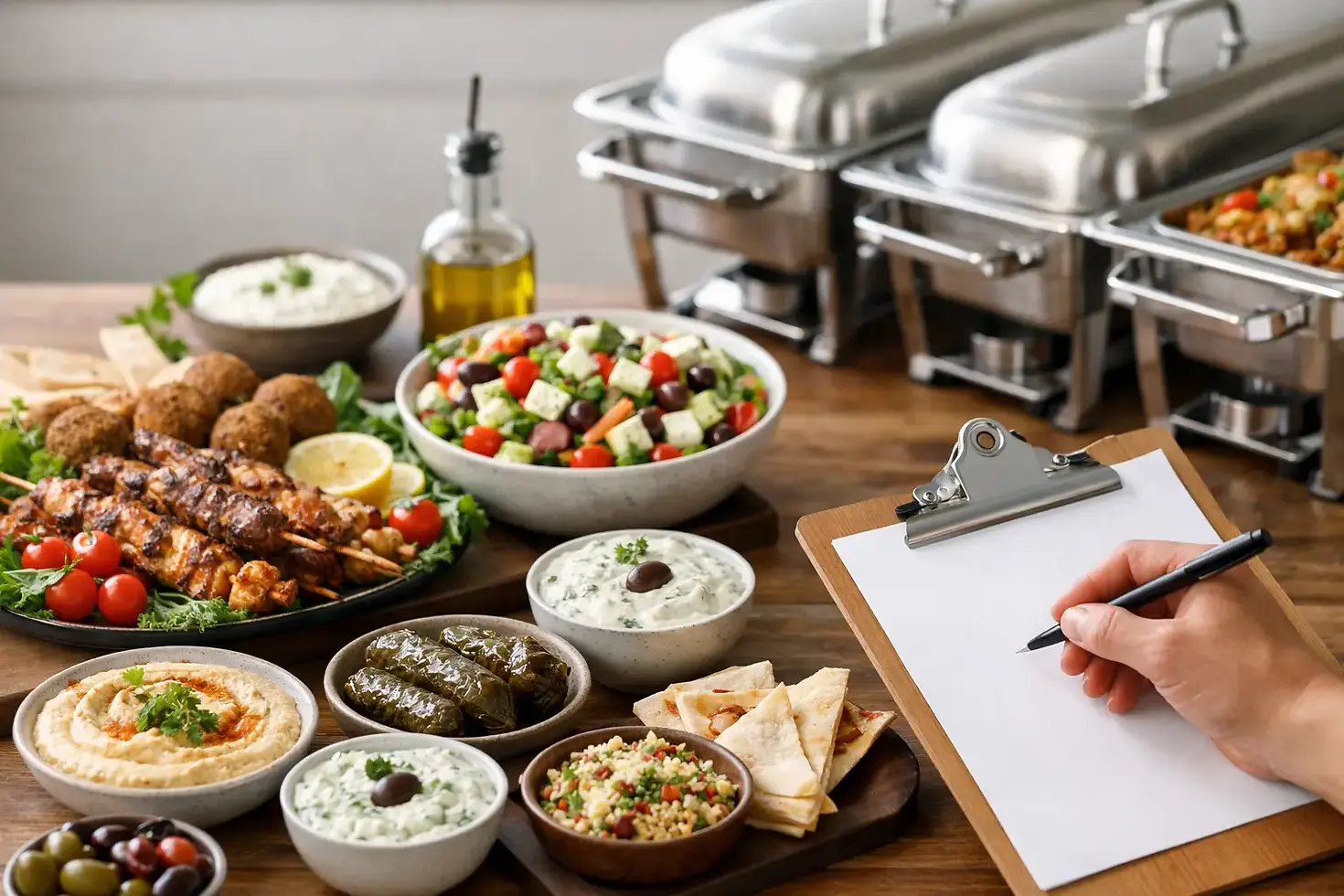
Mediterranean Catering Menu Planning Guide
- MICHAEL AFSHAR
- Jun 10
- 6 min read

Planning food for 20, 50, or 200 guests gets complicated fast when you want it to feel generous, polished, and actually memorable. A strong Mediterranean catering menu planning guide helps you avoid the usual mistakes - too much beige food, not enough variety, and a spread that looks full at the start but falls flat halfway through the event.
Mediterranean catering works best when the menu feels abundant without becoming heavy. Guests want color, fresh herbs, grilled proteins, warm breads, bright dips, rice dishes, salads, and a few comfort items that make the whole table feel complete. The goal is not to offer everything. The goal is to build a menu with balance, flow, and enough range that different tastes and dietary needs are covered without turning the order into a mess.
What a Mediterranean catering menu should do
A good catering menu is not just a list of popular dishes. It should match the event, the guest mix, and the way people will actually eat. A corporate lunch usually calls for cleaner portions, easier serving, and food that holds well over time. A birthday, engagement party, or family gathering can lean more festive, with bigger platters, more shared appetizers, and richer combinations.
That is where Mediterranean food has a real advantage. It naturally supports communal dining. Mezze, kabobs, rice, wraps, salads, seafood, and vegetarian plates all fit together on one table without competing. You can create a menu that feels upscale and relaxed at the same time, which is exactly what many hosts want.
Start your Mediterranean catering menu planning guide with the event format
Before choosing a single appetizer, decide how the food will be served. This shapes almost every menu decision after that.
Buffet service gives you the most flexibility. It is ideal for larger social events because guests can build their own plates, go back for favorites, and mix grilled meats with dips, rice, and salads however they like. It also lets you offer more variety without needing every dish portioned in advance.
Plated service feels more formal, but it requires tighter menu control. You need fewer options, cleaner presentation, and proteins that can be executed consistently at scale. This format works well for weddings, VIP dinners, and business events where timing matters.
Family-style lands in the middle. It feels warm, social, and generous, especially for Persian and Mediterranean menus where shared plates are part of the experience. It can be one of the best choices for private celebrations, though it depends on table setup, staffing, and how much room guests have to pass dishes comfortably.
If your event includes mingling more than seated dining, focus on items that are easy to eat while standing. Wrap halves, skewers, dips with pita, and neatly portioned appetizers make more sense than saucy entrees that require a knife and a full place setting.
Build around a few core anchors
Most successful menus have three anchors: appetizers, mains, and sides that tie everything together.
Start with mezze. Hummus, babaganoush, mast-o-khiar, stuffed grape leaves, falafel, and other shareable starters set the tone right away. They add color and texture, and they give guests something to enjoy immediately without waiting for the main course. For larger events, appetizer variety matters because it creates visual abundance.
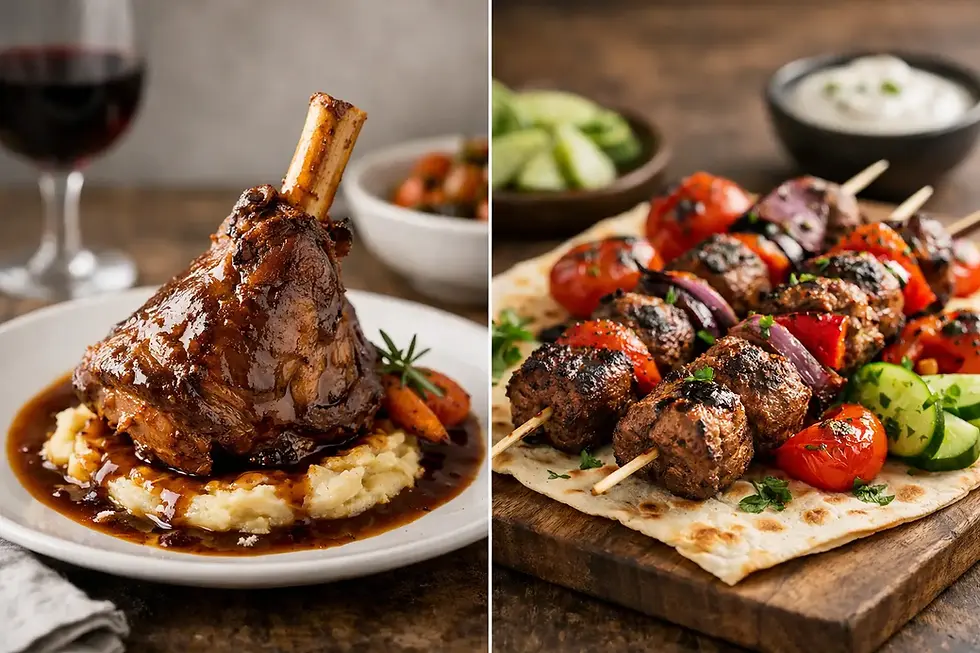
For mains, grilled proteins usually carry the menu. Chicken kabobs, koobideh, beef, lamb, or seafood all work well depending on your crowd and budget. Chicken is often the safest high-volume option because it appeals to a wide range of guests and holds up well in catering. Beef and lamb feel more elevated, but they may not suit every audience. Seafood can be a great addition for premium events, though it requires more attention to timing and temperature.
The sides are what make the meal feel finished. Saffron rice, grilled vegetables, Shirazi salad, Caesar salad, roasted potatoes, and warm pita all serve different purposes. Rice adds comfort and substance. Salads bring brightness. Bread and dips create that casual, communal energy people expect from Mediterranean catering.
Balance familiar choices with signature dishes
One of the biggest planning mistakes is making every dish adventurous or every dish too safe. A better approach is to mix familiar crowd-pleasers with a few signature selections.
If you are serving a broad guest list, include at least one protein and one side that almost everyone will recognize right away. Grilled chicken, rice, salad, and hummus are dependable for a reason. Then layer in dishes that create personality, like saffron-forward rice, koobideh, charbroiled seafood, or distinct Persian stews if the format allows.
This balance matters because guests want something they know they will enjoy, but they also remember menus that feel different from standard catering. At Divan Grill & Lounge, that mix of authentic Persian cuisine and social event energy is exactly what turns a catered meal into part of the celebration instead of just another tray line.
Do not treat vegetarian options like an afterthought
Mediterranean catering is especially strong when it comes to vegetarian-friendly planning, but only if those dishes are chosen with intention. A weak event menu often assumes salad is enough. It is not.
Vegetarian guests should have access to real substance: falafel, hummus, babaganoush, rice, grilled vegetables, lentil-based dishes, stuffed grape leaves, and fresh salads that feel complete rather than decorative. If vegan guests are expected, check sauces, yogurt-based dips, and rice preparation in advance.
Even meat-eaters tend to enjoy these dishes, so they are not just accommodation items. They make the whole menu more varied and colorful. That is good for guest satisfaction and good for presentation.
Portion planning is where good menus become great ones
A Mediterranean spread should look generous, but there is a difference between abundance and overordering. Portion planning depends on the time of day, event length, and whether food is the main attraction or one part of a bigger social experience.
For lunch events, guests usually eat lighter and faster. You can often keep the menu tighter with two mains, one rice or starch, one to two salads, bread, and a few appetizers. Dinner events typically call for a fuller spread, especially if the occasion is celebratory.
If alcohol is part of the event, guests often snack more broadly over time rather than eating one large plate all at once. In that case, appetizer volume matters. If the event is short and structured, heavier emphasis on entrees may make more sense.
This is also where guest count honesty matters. Ordering for exact RSVP numbers is risky. A little cushion protects you from bigger appetites, plus-ones, and the dishes that disappear first. Usually, the smarter move is to trim unnecessary variety before trimming volume too aggressively.
Think about flow, not just flavor
The best catered menus have rhythm. Guests should move naturally from lighter, fresh items into richer dishes, then circle back for favorites. That experience is easier to create when you vary texture and temperature.
A table full of soft dips and rice can taste good but still feel repetitive. Add crunch with fresh vegetables, pickled elements, or crisp falafel. Add contrast with char from grilled meats and brightness from lemon, herbs, and cucumber-based sides. The food should feel layered.
Presentation matters here too. Mediterranean catering already brings visual advantage with herbs, saffron, tomatoes, cucumbers, grilled skewers, and colorful spreads. Use that. A menu that looks vibrant signals freshness before anyone takes a bite.
Match the menu to the mood of the event
A daytime office lunch and a late-evening private party should not eat the same way. This sounds obvious, but many hosts choose dishes based only on personal favorites.
For business catering, cleaner combinations usually win. Think chicken kabobs, rice, salad, hummus, pita, and one vegetarian main. It is polished, easy to serve, and broadly appealing.
For social celebrations, you can go richer and more interactive. Add more mezze, mixed grill platters, wraps, seafood, dessert trays, and lounge-style bites that invite people to linger. If the event is designed around conversation, music, and a longer night, the food should support that energy rather than feel overly formal.
A practical Mediterranean catering menu planning guide for easier decisions
If you are stuck between too many options, simplify the build. Start with two to three appetizers, two proteins, one vegetarian anchor, one rice or starch, one to two salads, bread, and beverages or desserts if needed. That gives enough range for most events without overcrowding the table.
Then ask a few practical questions. Will this food hold well for the serving window? Can guests identify what each dish is? Is there enough variety in texture and color? Have dietary needs been covered in a real way, not just symbolically? Those questions usually reveal whether your menu is ready or still needs adjustment.
The strongest menus are not necessarily the largest. They are the ones where every dish has a role.
Common mistakes to avoid
Too many heavy items can make the meal feel sleepy, especially at midday. Too many dips without enough mains leaves guests hunting for substance. Too much customization can also create service problems and slow down execution.
Another common miss is ignoring the setting. Outdoor events in warm weather need dishes that hold up well and stay appealing over time. Formal indoor events can support more delicate presentation. The menu should fit the environment just as much as the guest list.
Finally, do not underestimate how much people care about authenticity. Mediterranean and Persian food has strong identity, and guests notice when the menu feels generic. Real seasoning, quality ingredients, and well-executed staples matter more than trendy add-ons.
When you plan with balance, the food does more than feed people. It sets the tone, keeps guests gathered, and gives the event that full-table energy everyone remembers the next day.


Comments