Persian Kabobs Worth a Night Out in Orange County
- MICHAEL AFSHAR
- 11 minutes ago
- 5 min read

The first signal is the aroma: charcoal, saffron, roasted tomato, and warm bread arriving at the table. Persian kabobs are built for that moment when everyone pauses, reaches for a fork, and starts sharing. They are not just grilled meat on a plate. Done well, they bring together careful seasoning, fire, fragrant rice, and the kind of hospitality that turns dinner into an occasion.
At a Persian table, the kabob is often the centerpiece, but it is never meant to stand alone. Rice, herbs, grilled vegetables, and bright, cooling sides all have a role. That balance is what makes this meal feel satisfying rather than heavy, whether you are meeting friends for dinner, bringing the family together, or making a night of it in Orange County.
What Makes Persian Kabobs Different?
Persian kabobs are known for clean, focused flavor. Rather than burying the meat under a thick sauce or aggressive spice blend, traditional preparations let quality ingredients do the work. Onion, salt, pepper, saffron, lemon, and sometimes yogurt or olive oil are common building blocks. The exact recipe changes by kabob, but the goal stays the same: tender meat with a deep grilled finish and enough seasoning to complement, not cover, its natural flavor.
The grill matters just as much as the marinade. Kabobs are traditionally cooked over hot coals, which create a smoky exterior while keeping the inside juicy. Timing is critical. Too little heat and the meat loses its character; too much and even a beautiful cut can dry out. That contrast between lightly charred edges and a tender center is what guests remember.
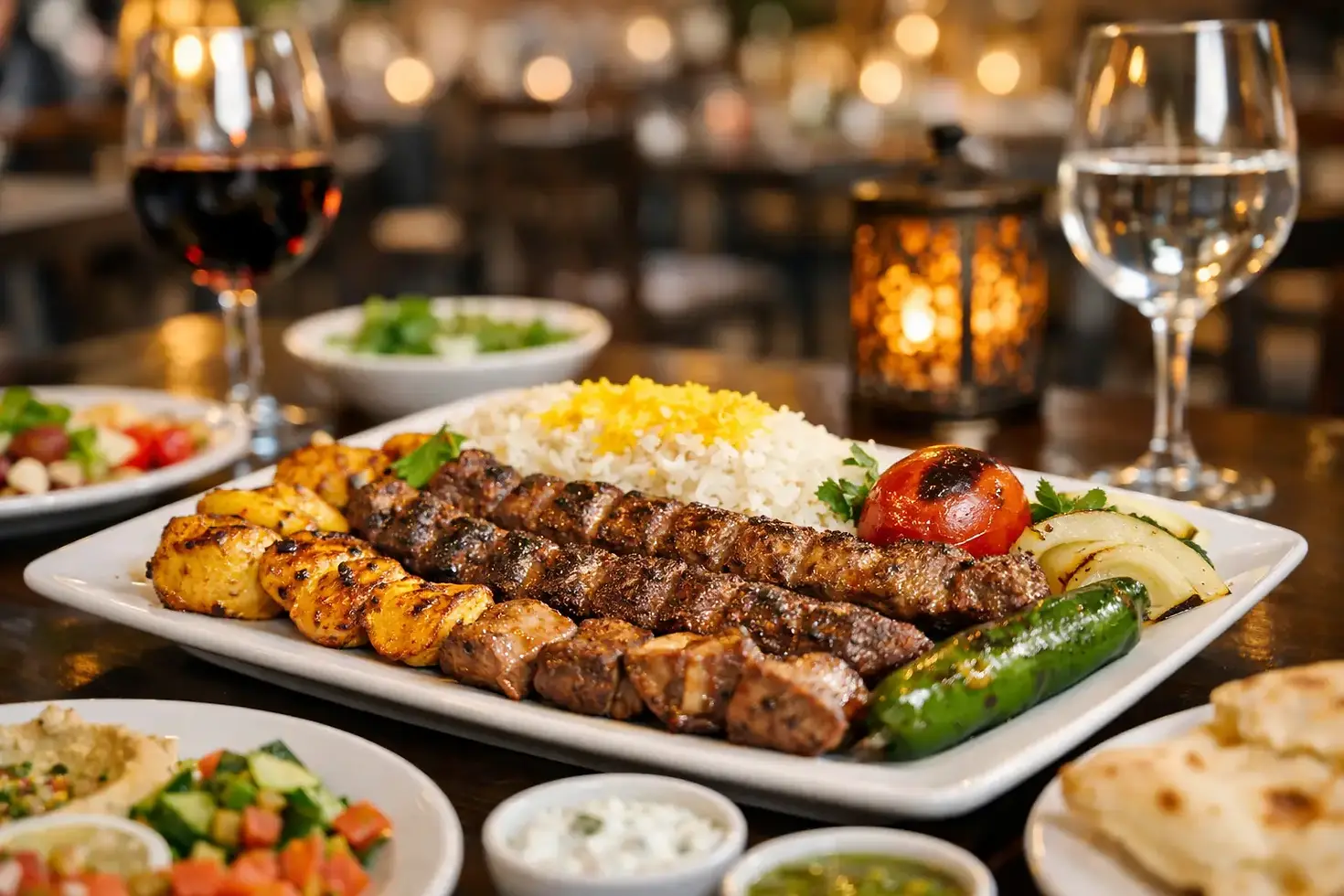
The accompaniments bring the whole plate into focus. Saffron basmati rice adds floral aroma and buttery color. A grilled tomato offers sweetness and acidity. Fresh herbs, onions, sumac, and flatbread give diners different ways to build each bite. It is a generous style of dining, made for lingering at the table.
The Persian Kabobs to Know
Koobideh: the classic ground-meat kabob
Koobideh is the kabob many guests picture first. Ground beef, lamb, or a blend is mixed with finely grated onion and seasoning, then pressed along a wide skewer and grilled. Its texture should be soft and juicy, with enough structure to hold together over the fire.
Because koobideh has a straightforward ingredient list, quality is easy to taste. The meat needs the right fat ratio, the onion must be handled carefully, and the grill temperature has to be consistent. When it is right, koobideh is rich, savory, and especially good with saffron rice and a sprinkle of sumac.
Barg: tender cuts with a refined finish
Barg is made from thin slices of tender beef, often filet mignon, seasoned and grilled quickly. It is a great choice for diners who want a more delicate texture and the clean flavor of a premium cut. The preparation may look simple, but it depends on precision. Thin meat can go from perfectly tender to overcooked in very little time.
Barg is often a natural pick for date night or a celebratory dinner. Pair it with rice, grilled tomato, and a bright salad or yogurt side to balance the richness.
Joojeh: saffron chicken with serious flavor
Joojeh kabob brings saffron-marinated chicken to the grill. Lemon, onion, and saffron help create its signature golden color and aromatic flavor, while the grill adds a gentle smokiness. It can be made with breast meat, thigh meat, or bone-in chicken, depending on the kitchen and style of service.
For diners new to Persian cuisine, joojeh is an easy starting point. It is familiar enough for almost any palate, yet the saffron and charcoal flavor make it feel far from ordinary grilled chicken.
Seafood and vegetable-friendly choices
Persian and Mediterranean menus can also offer seafood kabobs, grilled shrimp, salmon, or vegetable plates that keep the same fire-kissed spirit. These choices are ideal when a group has different preferences. One guest may want koobideh, another may be craving shrimp, and someone else may want grilled vegetables with rice and mezze. The table still feels connected because the flavors belong together.
Why Saffron Rice Is Not Just a Side
A kabob plate without great rice feels incomplete. Persian rice is typically made with long-grain basmati, prized for its fragrance and fluffy, separate grains. Saffron is bloomed to release its color and aroma, then used to create the golden portion of rice that often crowns the plate.
The rice serves a practical purpose too. It catches the juices from the kabob, softens the smoky intensity of the grill, and gives every bite a fragrant base. Add grilled tomato, butter, or a touch of sumac, and the plate becomes layered without becoming complicated.
For a fuller meal, add sides that bring contrast. Creamy yogurt, crisp salad, hummus, eggplant dishes, and fresh herbs can all brighten the richer flavors of grilled meat. The best order depends on your group. A couple may keep it simple with one shared appetizer, while a larger table benefits from several mezze plates so everyone can sample and pass dishes around.
How to Order Persian Kabobs for a Group
Persian food shines when it is shared. If everyone at the table orders the same thing, the meal can still be excellent, but a little variety makes the experience more fun. Choose a mix of ground meat, chicken, and a premium beef or seafood option, then add rice and a few shareable starters.
For four or more guests, consider a family-style approach: select multiple kabobs, order extra rice, and bring in fresh salads, dips, or grilled vegetables. This gives guests room to try different flavors without committing to one plate. It also works well for birthdays, family gatherings, and work dinners where dietary preferences can vary.
There are trade-offs. A mixed grill gives the table variety, but it may be more food than a small group needs. Individual plates make portions easy, while shared platters create a more social experience. If you are planning a catered lunch or private event, a combination of kabobs and vegetarian-friendly sides is usually the safest way to make every guest feel considered.
Make the Meal a Full Night Out
A memorable kabob dinner does not have to end when the plates are cleared. Persian dining has always had a social side: tea after the meal, conversation that runs long, music in the background, and desserts or shared bites that keep the table together.
That is part of what makes Divan Grill & Lounge a strong choice for guests looking for authentic Persian cuisine with more energy around it. Come for flame-grilled kabobs and saffron rice, then stay for cocktails, Persian tea, premium hookah, music, karaoke, or a late-night gathering with friends. It is the kind of setting that works for an easy weeknight dinner and can just as easily carry a celebration into the evening.
The next time you are choosing where to meet, order Persian kabobs with enough room on the table for rice, herbs, and a few shared plates. Good food gets people there. Great food, music, and welcoming service give them a reason to stay.


Comments