Private Dining vs Catering: Which Fits Your Event?
- MICHAEL AFSHAR
- Jul 30
- 6 min read

A birthday dinner with cocktails, music, and everyone gathered around one table calls for a different plan than a 75-person office lunch. That is the real question behind private dining vs catering: are you bringing people to an experience, or bringing great food to where people already are?
Both options can serve authentic Persian and Mediterranean flavors, from grilled kabobs and saffron rice to shareable mezze and fresh salads. The better choice comes down to your guest count, venue, timeline, budget, and the kind of energy you want guests to remember after the last plate is cleared.
Private Dining vs Catering: The Main Difference
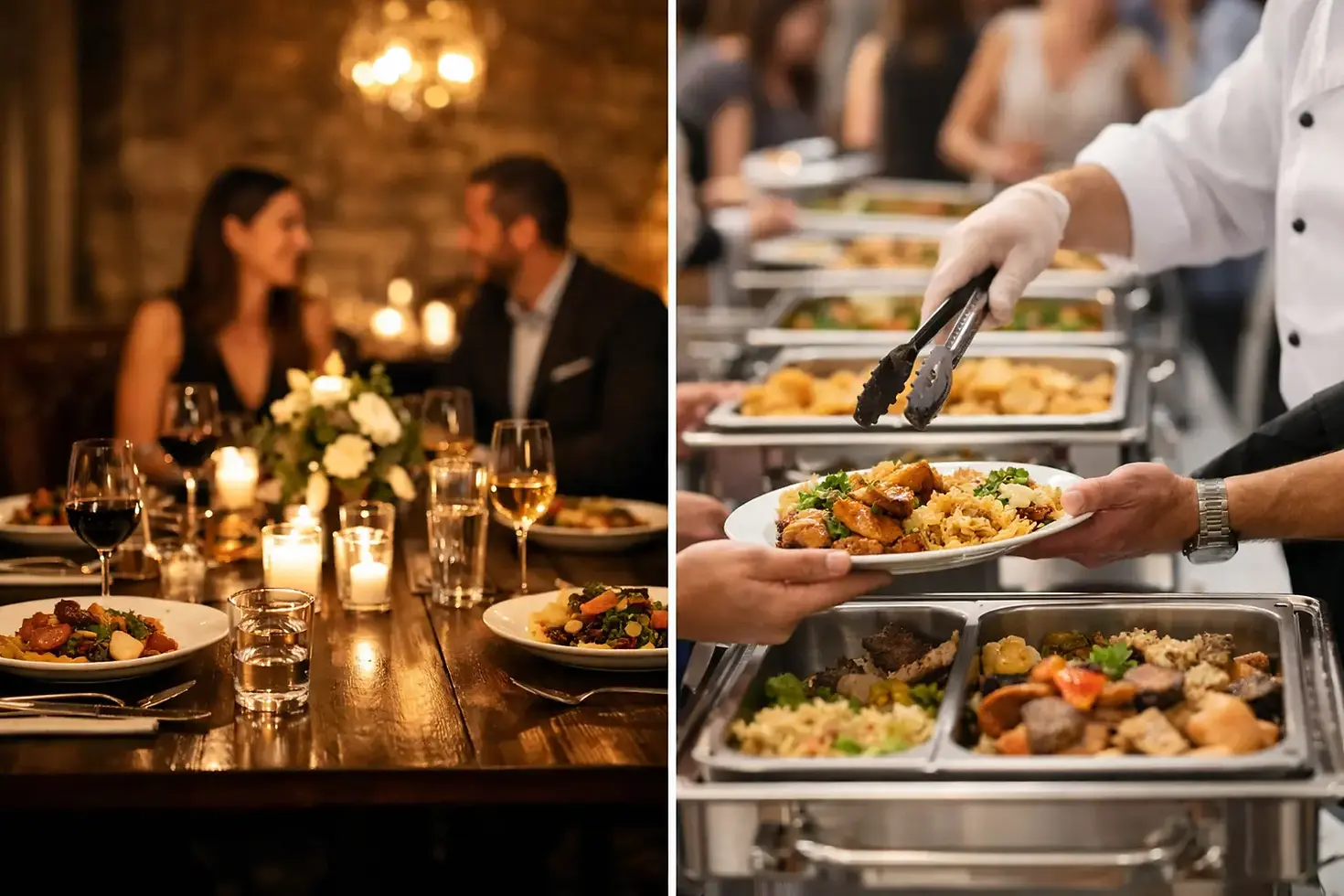
Private dining means hosting your group at a restaurant or lounge in a reserved dining area, private room, or designated event space. The venue handles the food, tables, service, and the overall setting. Depending on the location and event package, you may also have access to a bar, music, entertainment, or lounge amenities.
Catering means the food and, in some cases, service come to your venue. That may be an office, home, backyard, wedding venue, meeting hall, or rented event space. Catering can range from a simple drop-off meal to a fully staffed service with setup, chafing dishes, servers, and cleanup.
Neither is automatically more special. Private dining puts the atmosphere in place for you. Catering gives you more control over the location and event flow. Think of one as a hosted night out and the other as food designed around your event.
When Private Dining Is the Better Choice
Private dining works best when the restaurant setting is part of the reason for getting together. If you want guests to arrive, settle in, enjoy dinner, order drinks, and stay awhile, a private dining reservation creates that rhythm without putting the planning burden on you.
Choose it for celebrations that deserve a night out
Milestone birthdays, anniversaries, engagement dinners, graduation celebrations, reunions, and family gatherings often benefit from private dining. The host does not need to rearrange furniture, buy ice, set a table, coordinate rentals, or worry about washing serving platters at midnight. Everyone can focus on the occasion.
For groups who love Persian cuisine, a restaurant setting also makes a multi-course meal feel more complete. Shared starters can open the table, kabobs and rice arrive hot from the kitchen, and guests can linger over Persian tea or dessert. The meal has pacing, service, and a sense of occasion that is hard to recreate in a living room or generic banquet hall.
Choose it when vibes matter as much as the menu
A catered buffet can be excellent, but it does not create a destination on its own. Private dining is the stronger choice when you want the setting to carry part of the event. Lighting, music, cocktails, late-night energy, and premium hookah can turn dinner into a full social evening for the right group.
That matters for friend gatherings, young professional events, and celebrations where guests would rather stay connected than leave right after eating. At Divan Grill & Lounge, for example, the appeal is not limited to the plate. Authentic Persian food, lounge energy, and entertainment can give a group more reasons to stay together.
Choose it when you want fewer moving parts
A restaurant-hosted event can simplify planning, especially for groups of 10 to 40 guests. You generally confirm the headcount, menu approach, timing, and any beverage details, then let the venue run service. There is no need to secure a caterer, tables, serving equipment, staff, permits, or post-event cleaning separately.
Private dining is not always the lowest-cost route, particularly if your group orders cocktails or chooses a premium menu. Still, its value is often in what it removes from your to-do list. For a host who wants to enjoy their own event, that convenience is significant.
When Catering Makes More Sense
Catering is the better fit when your location is non-negotiable or your event needs a flexible schedule. A corporate lunch may need to happen in a conference room at noon. A baby shower may be planned around a backyard garden. A wedding reception may already have a venue, décor, and program in place.
Choose it for larger or location-specific events
For a crowd of 50, 100, or more, catering often gives you greater flexibility. You can choose a venue based on capacity, parking, accessibility, or proximity to your guests, then build the food service around that space.
It is also a practical answer for offices, schools, production sets, holiday parties, and community events. Guests do not have to travel to a restaurant, and the host can keep meetings, speeches, activities, or presentations on their own schedule.
Choose it when you need menu flexibility
Catering menus are often designed for easy group service. Platters of kabobs, rice, grilled vegetables, wraps, salads, dips, and vegetarian selections can serve a range of dietary preferences without requiring every guest to order individually.
This format is especially useful when you have mixed age groups or a quick lunch window. A well-planned catered spread lets guests serve themselves or receive pre-portioned meals, then return to the event. Ask early about vegetarian, vegan, gluten-sensitive, and allergy-related needs so the menu can be organized with care.
Choose it when your event has its own atmosphere
If your home, office, or venue already has the mood you want, catering allows the food to support it rather than compete with it. A formal fundraiser, a backyard graduation party, and a company awards night all have their own structure. In those cases, guests may value convenient, flavorful food more than a restaurant-style evening.
The trade-off is logistics. Someone still needs to confirm delivery access, serving tables, power needs for hot food, timing, waste disposal, and whether staff will be present. Drop-off catering keeps costs simple, while staffed catering offers more support but requires a larger budget and clearer coordination.
Compare the Costs Beyond the Menu Price
It is tempting to compare only the per-person food price, but that rarely tells the full story. Private dining may include service, tables, chairs, plates, glassware, and cleanup in the overall experience. Catering may begin with a lower food cost, then add delivery, staffing, rentals, serviceware, setup, venue fees, and gratuity.
A home event can save money on a venue, but it may require extra spending on tables, linens, beverages, ice, decorations, and cleanup. Conversely, a restaurant event may have a food-and-beverage minimum, but that minimum may be easy to meet when guests are already planning to dine and socialize.
Ask for an all-in estimate, not just a menu quote. Knowing the final expected cost per guest makes it much easier to compare the two formats fairly.
Questions That Make the Decision Easier
Before choosing, start with the experience you want. Do you picture guests seated for a paced dinner, or mingling around a buffet? Will people want cocktails, music, and a late-night setting, or do they need to eat efficiently before a meeting or program?
Then consider the practical details: your confirmed guest count, preferred date and time, venue availability, parking, accessibility, dietary needs, and whether children or older relatives will attend. A lively lounge may be perfect for one birthday group and less appropriate for a quiet afternoon family shower.
Also be honest about your role as host. If you want to welcome guests and enjoy the celebration, private dining can keep the work light. If having everyone in your own space matters most, catering gives you that freedom, provided you are comfortable managing the event details.
Make the Food Feel Generous, Whatever You Choose
Persian and Mediterranean food is built for gathering. A menu feels especially welcoming when it includes a balance of shareable starters, grilled proteins, fragrant rice, vegetables, salads, and a clear vegetarian option. Familiar choices make guests comfortable, while dishes such as koobideh, chicken kabob, hummus, dolma, and saffron rice bring color and character to the table.
For private dining, consider family-style service or preselected group menus to keep the meal moving. For catering, choose portions and serving formats that match the event. A working lunch may need individually packaged meals, while an evening celebration may call for abundant platters that invite people to return for another bite.
The best choice is the one that lets your guests feel cared for without turning you into the event staff. Give the food the attention it deserves, choose the setting that fits your people, and leave room for the conversations that make a gathering worth planning.


Comments