
Shawarma Wrap vs Kebab: Which Should You Order?
- MICHAEL AFSHAR
- Aug 13
- 5 min read

A late lunch with coworkers, a quick bite before a night out, or a table full of friends sharing Mediterranean favorites can all raise the same delicious question: shawarma wrap vs kebab - what is the real difference? Both can feature seasoned meat, warm bread, bright sauces, and fresh toppings. But the cooking method, presentation, and overall experience are not the same.
The simplest answer is this: shawarma is defined by meat cooked on a rotating vertical spit and shaved into thin, flavorful slices. Kebab is a much broader family of dishes, usually centered on grilled or roasted meat, often cooked on skewers. A shawarma wrap is a handheld format; a kebab can arrive as skewers, a plated entrée, rice bowl, sandwich, or wrap.
Shawarma Wrap vs Kebab: The Core Difference
Shawarma starts with stacked layers of marinated meat - commonly chicken, beef, lamb, or a combination - slowly turning beside a vertical heat source. As the outside caramelizes, the cook shaves off thin pieces to order. That process creates tender meat with crisp, deeply seasoned edges and a little variation in every bite.
The shaved meat is typically tucked into pita, saj bread, lavash, or another soft flatbread. It may be paired with garlic sauce, tahini, hummus, pickles, tomatoes, onions, lettuce, fries, or hot sauce, depending on the kitchen and regional style. Rolled tight and served hot, a shawarma wrap is built for convenience without giving up big flavor.
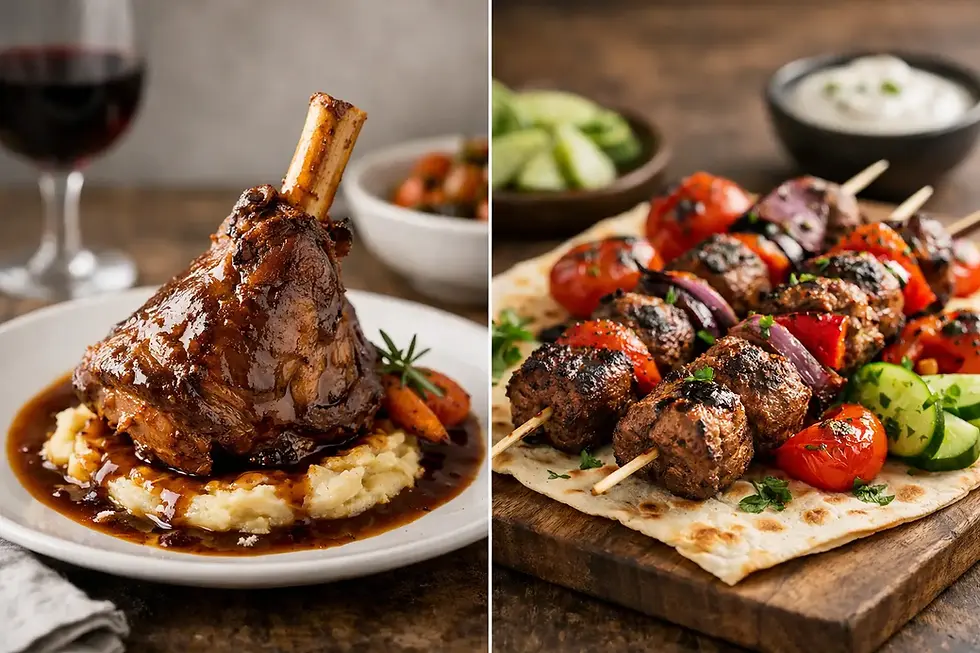
Kebab, also spelled kabob, refers to a wide range of grilled dishes with roots across the Middle East, Mediterranean, Central Asia, and South Asia. In Persian and Mediterranean dining, guests may find juicy ground-meat koobideh, saffron-marinated chicken kabob, tender beef, lamb, seafood, or grilled vegetables. The meat is often marinated, formed around a skewer, or cut into cubes before being cooked over an open flame or grill.
That distinction matters because a kebab is not automatically a wrap. A classic kebab plate is more likely to come with fragrant rice, grilled tomatoes, herbs, flatbread, and sides. You can certainly put grilled kebab into bread, but the food remains kebab because of how it is prepared, while shawarma describes the vertical-spit cooking style.
How the Cooking Method Changes the Flavor
The signature flavor of shawarma comes from slow roasting, fat rendering through the stacked meat, and the contrast between juicy interior slices and browned exterior bits. Marinades vary, but warm spices such as cumin, coriander, turmeric, paprika, allspice, cinnamon, cardamom, and black pepper are common. The result is savory, aromatic, and often rich enough to stand up to tangy pickles and creamy sauce.
Kebab flavor leans more directly into the grill. Char from the flame, a smoky edge, and the clean taste of the chosen protein are central to the experience. A Persian-style chicken kabob may be bright with lemon, onion, and saffron. Koobideh, made with seasoned ground beef or lamb, is tender and savory, with a satisfying grilled crust. Cubed beef or lamb kebab can be more substantial and steak-like, especially when served fresh off the skewer.
Neither is automatically spicier, healthier, or more authentic than the other. A shawarma wrap can be light and fresh with chicken and vegetables, or richer with extra sauce and fries. A kebab can be lean grilled chicken with salad, or a hearty plate with rice and butter. The better choice depends on what you are hungry for and how you want the meal to feel.
Bread, Rice, and the Full Plate
A shawarma wrap puts bread at the center. The flatbread holds the meat and toppings together, making it easy to eat while walking, between meetings, or on the way to an evening plan. The wrap is usually an all-in-one meal, with sauces and vegetables distributed through each bite.
Kebab often invites a slower, more communal style of dining. A plate may pair grilled skewers with basmati rice, grilled vegetables, salad, yogurt, herbs, and warm bread. That format gives each diner room to build the perfect forkful: a bite of saffron rice, a piece of smoky chicken, a roasted tomato, and a touch of yogurt or herbs.
For a group, kebab plates are especially easy to share alongside dips and appetizers. They bring visual appeal to the table and offer enough variety for guests with different appetites. A wrap is more personal and portable. A kebab platter feels more like settling in for dinner.
Which One Fits Your Craving?
Choose a shawarma wrap when you want a fast, satisfying handheld meal with layered textures. The combination of shaved meat, soft bread, crisp pickles, vegetables, and sauce makes it a strong choice for casual lunch, takeout, or a late-night bite. It is also ideal when you want every flavor in one compact package.
Choose kebab when the grill is calling. If you want clearly defined cuts of chicken, beef, lamb, seafood, or vegetables, plus rice and sides, a kebab plate delivers a more traditional sit-down experience. It is a great option for dinner dates, family meals, and group gatherings where sharing plates, starters, and conversation are part of the plan.
There is also a middle ground. Some menus offer kebab wraps, where grilled chicken or beef kebab is wrapped in soft bread with vegetables and sauce. That can be the right call when you love the charred flavor of the grill but want the convenience of a handheld meal. The name may vary by restaurant, so the best move is to look at how the meat is cooked and what comes with it.
A Quick Way to Order With Confidence
If you are deciding in the moment, start with texture. Want thin, tender, richly seasoned slices with pickles and garlic sauce? Order shawarma. Want grilled pieces or a skewer with smoky char and fluffy rice? Order kebab.
Then think about occasion. For a quick meal before meeting friends, shawarma keeps things easy. For a longer dinner with cocktails, tea, shared mezze, or premium hookah, kebab plates create more of a table experience. At Divan Grill & Lounge, that difference can shape the whole evening: a wrap suits a casual bite, while authentic Persian kabobs and rice dishes make a natural centerpiece for a night of great food, music, and vibes.
The Important Regional Nuance
Food names travel, and they do not always mean exactly the same thing everywhere. In some places, “kebab” is used broadly for many meat dishes, including meat carved from a vertical rotisserie. In others, shawarma, doner, gyro, and kebab are treated as distinct menu categories, even though they share culinary history and certain techniques.
Shawarma is closely related to Turkish doner, which also uses a vertical rotating spit. Greek gyro belongs to the same family of spit-roasted preparations, but the seasonings, bread, toppings, and proteins often differ. Kebab remains the wider umbrella, covering countless grilled and roasted specialties across many cultures.
That is why the most useful question is not which one is “better.” It is whether you want slow-roasted shaved meat wrapped in bread or the smoky, open-grill character of a kebab meal. Both bring serious flavor to the table, and both are even better when enjoyed with people who are ready to stay awhile.


Comments